

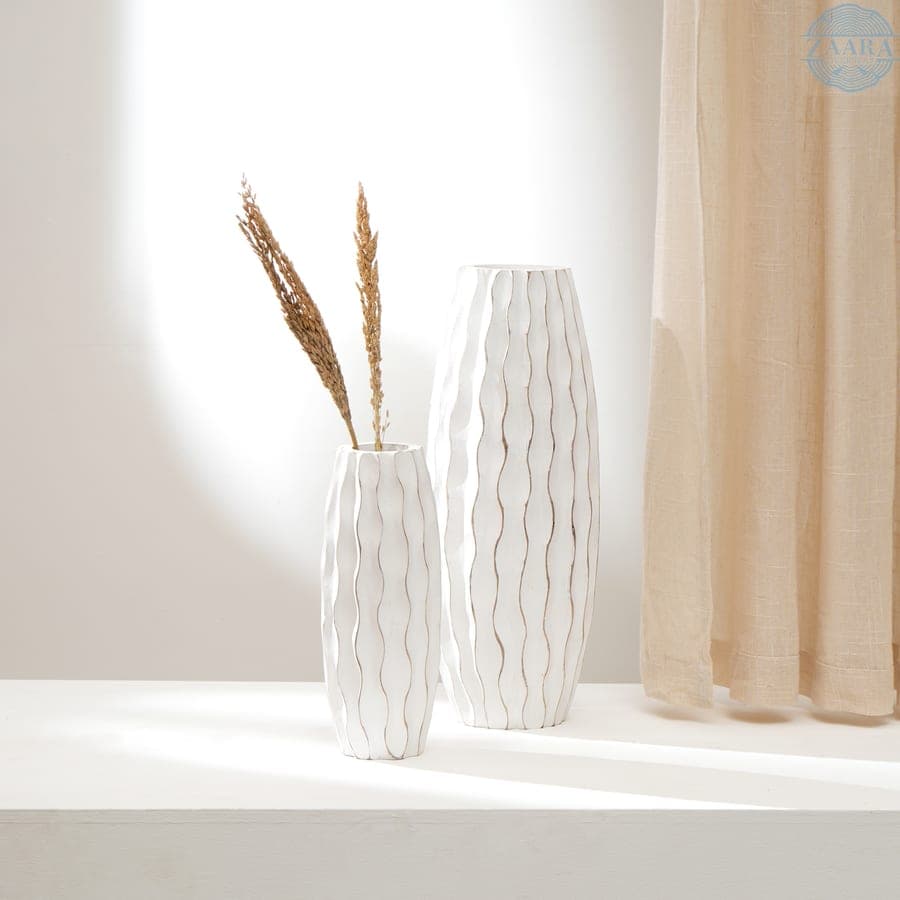
Décor Tips
5 Ways to Style a Wooden Vase in Any Room
A wooden vase is one of the most versatile objects you can own. It works empty or full, alone or in a group, on a shelf or a dining table. The trick is intention — a vase placed with thought reads as design; the same vase set down without it reads as something you forgot to put away.
Here are five reliable ways to style one, whatever the room.
1. Let it stand alone
The most underrated styling move is restraint. A beautifully turned vase with strong grain does not need flowers to earn its place. Set it on a clean surface — a console, a windowsill, the centre of a dining table — with nothing competing for attention, and let the form and the wood do the talking.
This works best with sculptural pieces: a ribbed silhouette, a wide carved belly, an unexpected proportion. Give it space on all sides. Negative space is what makes a single object feel deliberate.
Stylist's note
If a piece is interesting enough to make you look twice in our photos, it is interesting enough to stand on its own at home. Trust it.
2. Build a tablescape in odd numbers
Designers group objects in odd numbers — threes and fives — because the eye reads them as a composition rather than a matched set. Pair your vase with two or four companions of varying height: a stack of books, a small bowl, a candle, a low dish of stones.
The rule that ties it together is vary the height, repeat the material. Echo the warm wood tone somewhere else in the group, and let the heights step up and down so the eye travels across the arrangement instead of stopping flat.
3. Fill it the right way
When you do add stems, match them to the wood's mood rather than fighting it.
- Dried and preserved: Pampas, wheat, bunny tails, dried palm — these suit wood beautifully and last for months. Their neutral, organic texture is a natural partner for grain.
- Single bold stem: One dramatic branch or a few stems of eucalyptus reads as considered and modern.
- Seasonal fresh flowers: Wood loves warm tones — marigold, ranunculus, garden roses. (Use a slim glass insert inside the vase so water never touches the wood directly.)
The vase is the frame; the stems are the picture. Choose stems that flatter the frame, not ones that hide it.
4. Play with height and layering on shelves
On open shelving, a vase is a vertical anchor. Place it toward one end of a shelf rather than dead centre, and balance it across the run — a tall vase on the upper-left, a heavier object lower-right. Lean a small framed print behind it to add depth, and let one element (a trailing stem, a draped textile) break the rigid horizontal line of the shelf.
Keep the colour story tight. Wood, cream, a single accent tone. Shelves go wrong when they become a gallery of everything; they go right when they look edited.
5. Move it around with the seasons
The best part of owning a versatile piece is that it does not have to live in one spot forever. A vase that holds dried wheat on the dining table in winter can hold fresh blooms on the entryway console in spring, then move to the bedroom with a single stem in summer.
Rotating a few key pieces between rooms keeps a home feeling considered and alive without buying anything new — and it lets a genuinely lovely object be seen in more than one light.
The piece does the work
You do not need a cabinet full of décor to make a room feel finished. One handcrafted vase, placed with a little intention and restyled now and then, does more than a shelf packed with filler ever could. (For the bigger picture, see our guide to warm minimalism.)
Browse our vases if you are looking for that one anchor piece — each is turned and finished by hand, so no two carry exactly the same grain. Want to keep yours looking new? Read how to care for mango wood.
Written by
Priya Nair
Stylist, The Craft Journal
Priya styles spaces for our lookbooks and believes the best rooms are built around one or two pieces you genuinely love.
Keep Reading
All articles →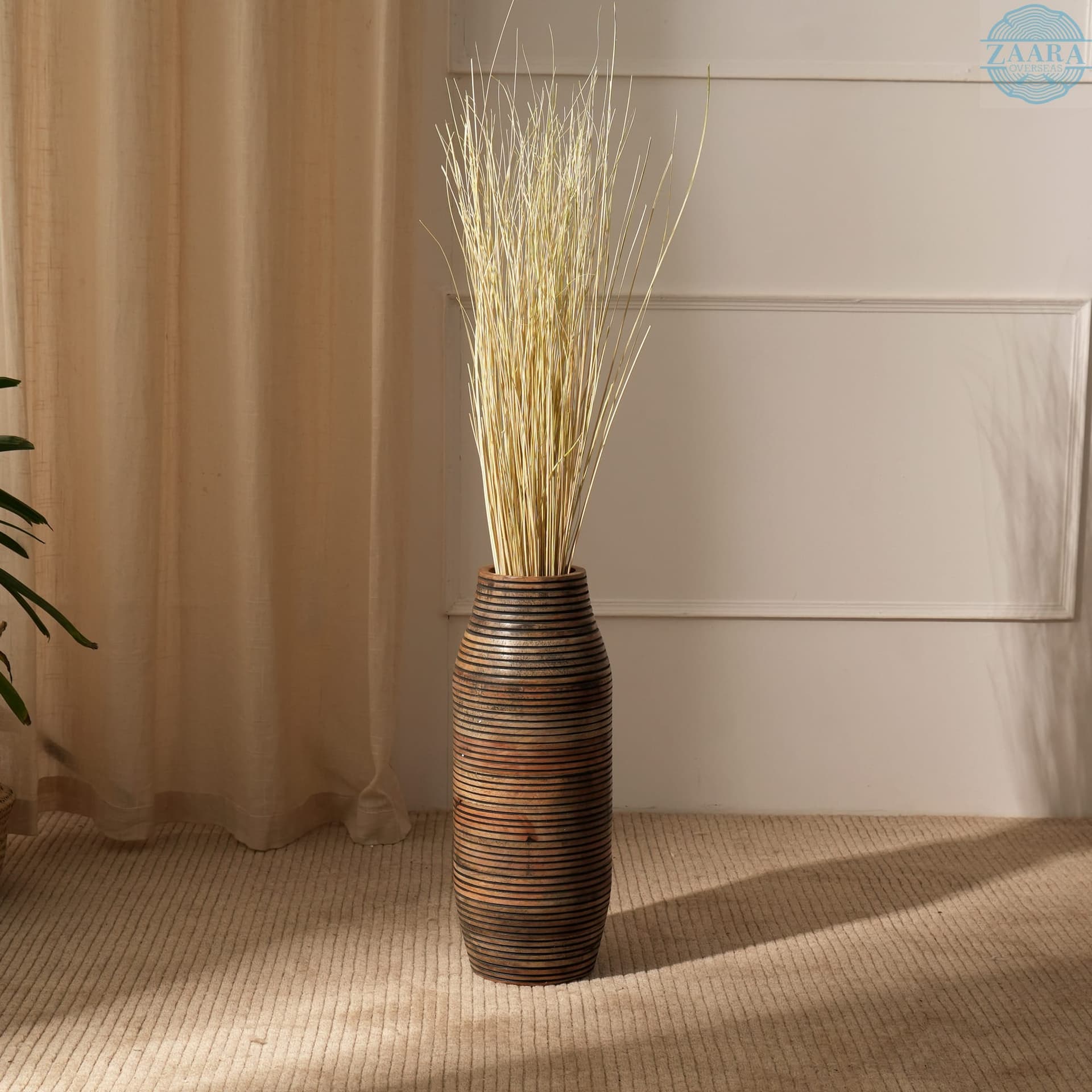
4 min read · 20 Mar 2026
Warm Minimalism: Bringing Natural Wood into a Modern Home
Minimalism does not have to feel cold. Natural wood is the easiest way to keep a pared-back home warm, human, and inviting. Here is how to do it well.
Read article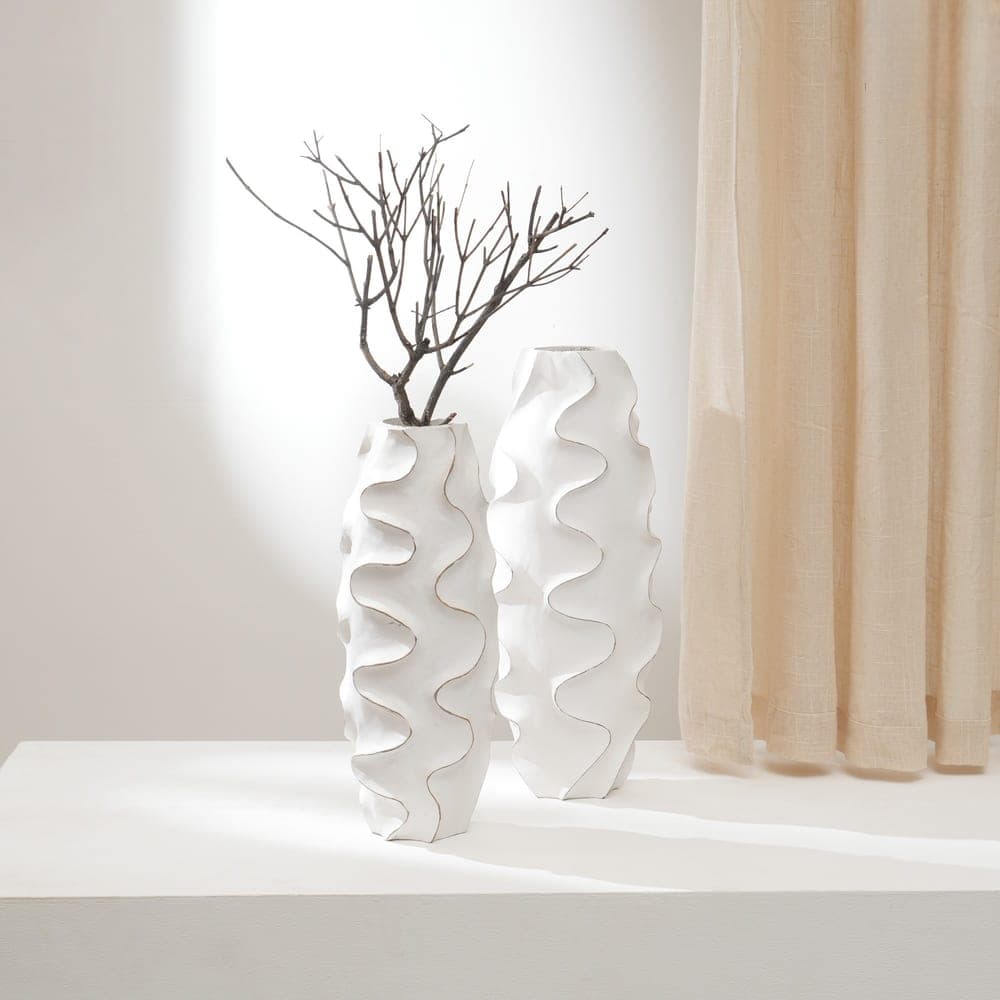
5 min read · 5 Jun 2026
How to Care for Your Mango Wood Furniture
Mango wood is dense, warm, and built to last generations — if you treat it right. Here is the simple care routine our master artisans swear by.
Read article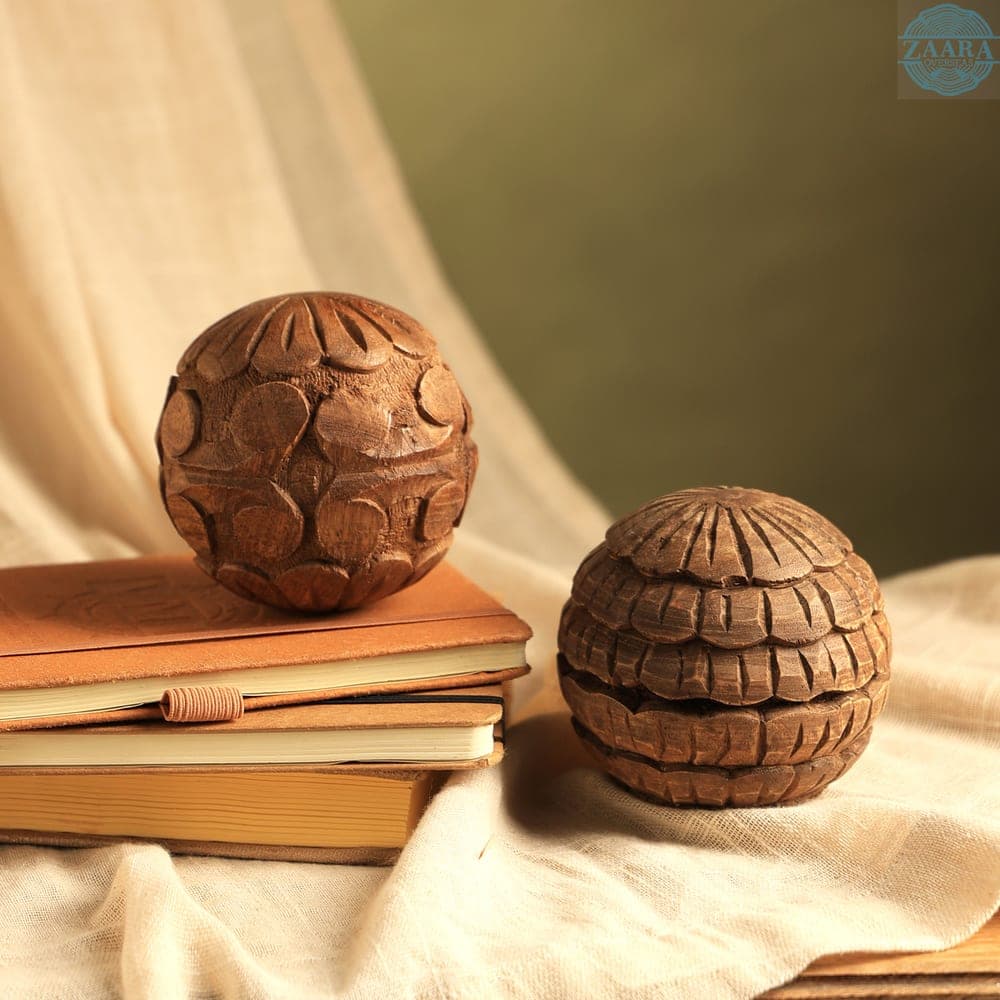
4 min read · 8 May 2026
Meet the Hands Behind Saharanpur's Wood Craft
For over four centuries, the carvers of Saharanpur have turned mango and sheesham into art. We spent a week in the workshops that make our pieces.
Read articleThe Craft Journal
Enjoyed this story?
Get wood-care guides, styling ideas, and artisan stories in your inbox — plus 10% off your first order.
No spam. Unsubscribe anytime. Privacy Policy